
Bulletproof
Every dentist wings
occlusion.
Until they don't.
Bulletproof Dentistry gives you the systems and protocols dental school never taught you.
London Heathrow (Radisson Blu) · June 26–27, 2026 · 26 hours CPD (of which 10 Hours is Online Pre-Course Material)
2026 Tour Dates
June 26-27
London Heathrow (Raddison Blu)
Let's be honest about what's actually happening in clinic.
You didn't go to dental school to wing it. But when it comes to occlusion, honestly, most of us are.
Not because we're bad dentists. Because dental school gave us a 3-hour lecture full of words like "centric relation" and "Bennett angle" and then sent us into the world with no system, no protocol, and no real way to apply any of it.
So we do what we were trained to do: tap with articulating paper, eyeball it, ask the patient if it feels okay, and move on.
And most of the time? It's fine.
Until it isn't.
Do any of these sound familiar?
That crown fit. You're 35 minutes in. The marks keep moving. You're going thinner and thinner. Your nurse has gone quiet. The patient is looking at their watch. You finally say "that's as good as it's going to get" - and you both know it isn't. That appointment should have taken 8 minutes.
The click. You fitted it perfectly. Great margins, great shade, you were proud of that one. Three weeks later they're back. A clicking that wasn't there before. You adjusted it again. Smiled and said it would settle. But you didn't really know why it happened. Or whether it would happen again.
The referral. The dentistry was within your ability. The prep, the impressions, the temporaries, all fine. But it was a wear case, or there was a VDO issue, and the bite made you nervous. So you referred it. The right call, maybe. But part of you knew it wasn't about skill. It was about confidence in the occlusion.
The remake. The crown went in fine on the day. Six months later: chipped or cracked. Or the veneer debonded. Or the bridge connector fractured. You absorbed the lab fee, sat the patient down, explained it. They were gracious. But you knew. Bad occlusal design. And you weren't sure how to prevent it next time.
The treatment plan you undersold. You saw what the case needed. But when it came to presenting the full plan — especially the complex stuff — you hedged. You scaled it back. You said "let's start with one and see how it goes." Not because of the patient. Because you weren't certain enough to promise a predictable outcome.
None of these make you a bad dentist. They make you a normal dentist without a system.
Bulletproof is the system.
Remakes. Every crown, veneer, or bridge that fails early because occlusal forces weren't managed. The lab fee. The chair time. The conversation. The damage to a patient relationship you spent years building.
Time lost at crown fits. Twenty extra minutes per indirect restoration, three crown fits a week - that's fifty hours of unnecessary stress a year. Gone.
Referred cases. The wear case, the full-arch case, the quadrant you sent away. Each one is a four-figure fee that walked out your door, not because you couldn't do the dentistry, but because the occlusion made you uncertain.
Bite complaints. One patient who keeps coming back about their bite costs more in time, anxiety, and paperwork than almost any other scenario. And it rarely needs to happen.
Undermined treatment plans. Every time you hedge on a plan because you can't guarantee the outcome, every "let me think about it" from a patient who sensed your uncertainty, is revenue and opportunity you'll never recover.
The gap in your occlusion knowledge isn't abstract. It has a price tag. Add it up across a year:
Bulletproof costs a weekend. The knowledge stays forever.
After two days, you will see every patient differently.
Not metaphorically. Literally. The way you look at a mouth will change - permanently.
You'll walk into clinic the next week and run an occlusal risk assessment the way you run a caries risk assessment. Automatically. Wear patterns, muscle tenderness, joint signs, tooth guidance… it will all mean something. Not just findings to record, but a risk picture that tells you exactly how to design your restoration.
Crown fits become efficient.
You'll stop chasing marks and start reading them. Marks mean specific things — you'll know what you're looking at, what to remove, and when to stop. A crown fit that was eating 35 minutes will take 8. Every time.
Remakes become rare.
Because you'll design restorations that account for the forces your patient actually generates. You'll spot the bruxist, the clencher, the patient with anterior guidance issues before you start… and adjust your material choice, your occlusal scheme, and your lab prescription accordingly. The crown that chips at six months? You'll see it coming before you even prep.
You'll know when NOT to take a case.
This one is underrated. Bulletproof teaches you to identify red flags — patients whose occlusal risk is so high that the result will be unpredictable regardless of how good your dentistry is. Knowing when to say no, and being able to explain exactly why, protects your reputation, your mental health, and your evenings.
You'll stop referring cases you should be keeping.
Full-arch wear cases. Quadrant restorations. Patients with mildly complex presentations. These are well within the scope of a well-trained GDP. Bulletproof gives you the framework to assess them, plan them, and deliver them with confidence.
Your treatment plans become more persuasive.
Not because you'll use better sales techniques. Because you'll present with genuine certainty. When you can say "here's what I've assessed, here's the risk, here's how I've designed for it, and here's why it will last" — patients say yes. Not because you convinced them but because they could feel that you knew.
Your patients stop coming back with bite complaints.
Because you caught the issue before it became one. Because the restoration was designed right. Because the occlusal risk was managed from the start, not discovered three weeks post-fit.
And yes — patients will think you're a genius. Because you'll be doing things their last dentist never thought to check.
“Every dentist should do this before their career. Not after the complaint.”
This course is for you whether you've been practising for 2 years or 22.
We built Bulletproof with zero prior occlusion knowledge assumed, not because we think you don't know anything, but because most of what dental school taught was either too abstract to use or too textbook to survive contact with a real patient.
We start from the ground up. But we move fast. By the afternoon of day one, dentists with 15 years of experience are rethinking cases they've been doing for years.
Bulletproof is especially for you if:
You've ever spent more than 15 minutes adjusting a single crown — and still weren't happy
You've had a patient report a bite complaint, a headache, or a TMJ click after your restoration
You've referred a case because the occlusion felt uncertain, not because the clinical work was beyond you
You've had a remake or an early failure you couldn't fully explain
You've presented a treatment plan with less than full confidence because you weren't sure it would hold
You've sat in a study club or peer review and felt completely lost when occlusion came up
You've said "let's see how it settles" more times than you'd like to admit
If any of those land, you're in exactly the right place.
Fun fact: Dentists travel from around the world for this course - we have had delegates from:
Australia, USA, France, Libya, Estonia, Italy, Ireland, Slovenia and Scunthorpe!
What dentists say after the weekend
“Course content was exceptionally thorough and well organized, Real world clinical applications - can use it straight in practice, very enjoyable and inspiring to learn from someone so passionate and invested in their field.” - Dr. Jane Laks
“Really informative, applicable to everyday dentistry + funny delivery and kept me interested throughout.” - Dr. Natalie Elliot Lake
Most occlusion courses give you a vocabulary. Bulletproof gives you a system.
Definitions. Diagrams. Things you'll forget by Tuesday.
Bulletproof is different. It's a risk-based way to assess every patient, every restoration, every bite adjustment - the same way you think about caries risk or perio risk.
You'll leave with:
A step-by-step protocol for checking and adjusting occlusion — no more randomness
An occlusal risk framework for every patient — so you know when to be cautious before you start, not after
A lab prescription structure that communicates exactly what you need
Hands-on practice on real articulated patient models — not perfect typodont teeth
Checklists in your notes app, ready for Monday morning
Practical. Predictable. Repeatable.
Dental school already gave you theory. You don't need more definitions. You need a system, and the hands-on practice to make it stick.
Before you arrive: 10 hours of pre-course video.
You get lifetime access to pre-course modules the moment you enrol. Watch in your own time — the commute, after clinic, at the weekend. By the time you walk in, you know the concepts. Which means the two live days are pure doing.
In the room: 16 hours of hands-on training.
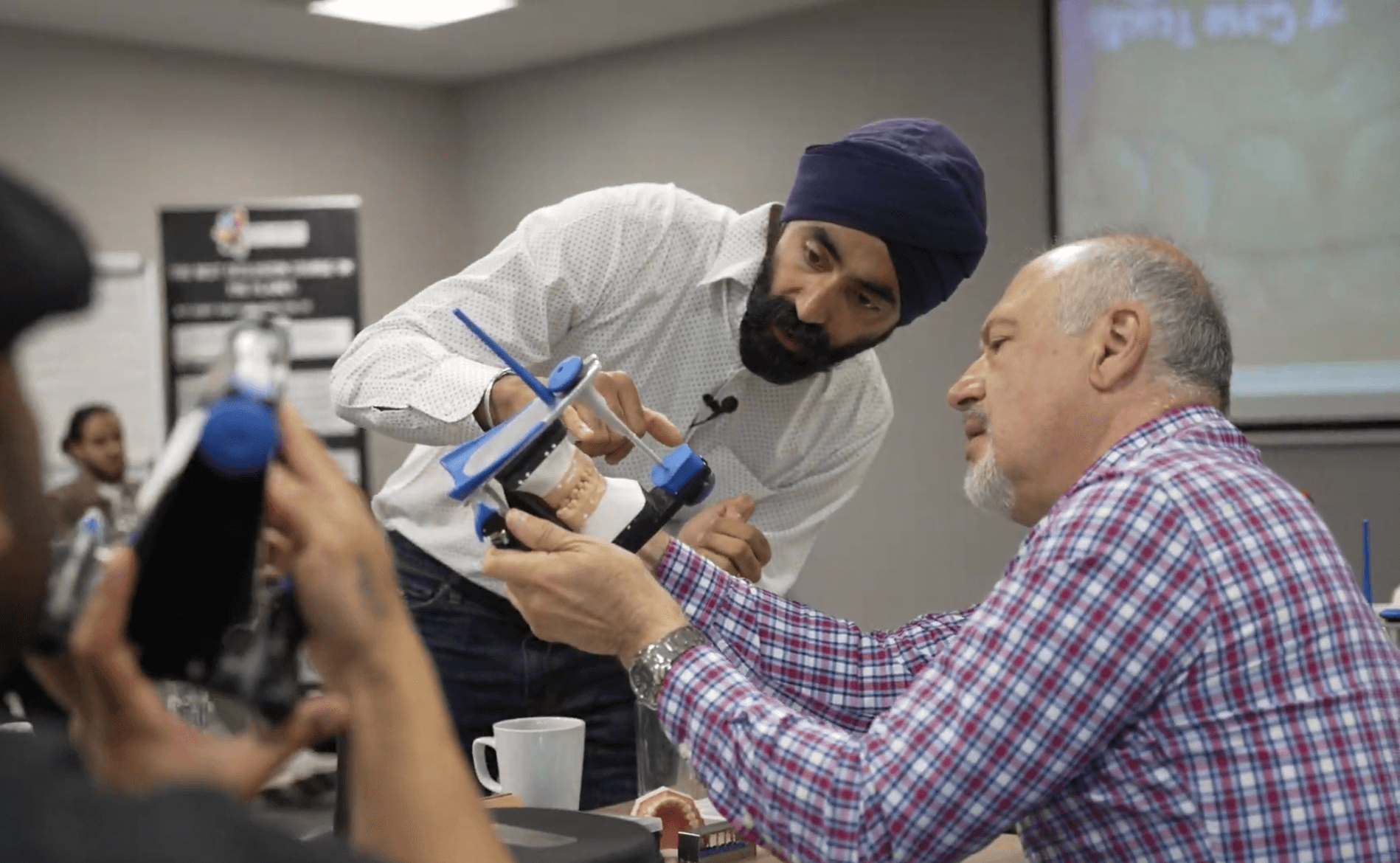
You'll work on real patient articulated models — actual cases from Jaz and Mahmoud's practices. Not perfect typodont teeth. Real anatomy. Real wear. Real challenges. Because you can't learn occlusion on typodonts.
After the course: it compounds.
Bulletproof attendees don't just have fewer complaints. They get more efficient every week — because the protocol gets faster with repetition. They take on more complex cases — because their confidence has a foundation. They present treatment plans differently — because predictable is no longer a hope. It's a design choice.
26 hours CPD total · London Heathrow (Radisson Blu), June 26–27, 2026 · Spaces are limited.
180 Occlusion – 18 Hours
610 Fixed Prosthodontics – 6 Hours
200 Orofacial Pain – 2 Hours
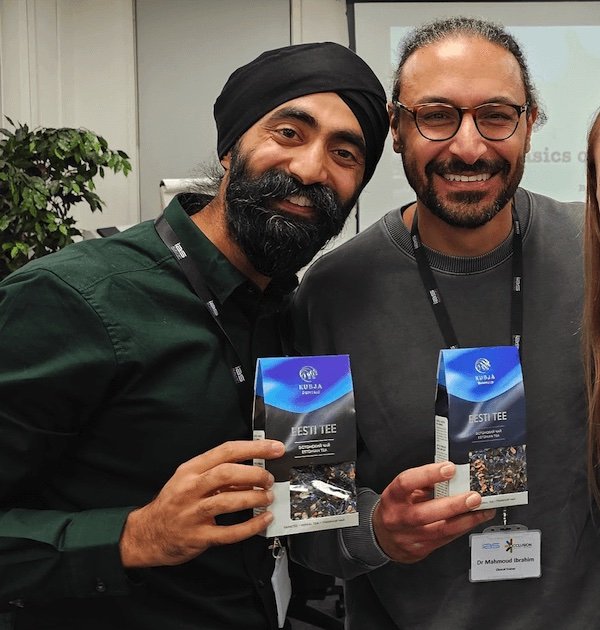
Taught by Dr Jaz Gulati & Dr Mahmoud Ibrahim
Jaz is the host of the Protrusive Dental Podcast, one of the most listened-to dental education podcasts in the world. He has spent years translating complex occlusal science into the kind of pragmatic, relatable clinical thinking that actually survives contact with a busy NHS or mixed practice.
Mahmoud brings a level of clinical precision and hands-on teaching skill that consistently leaves delegates rethinking what they thought they already knew.
Together, they don't teach occlusion as a subject. They teach it as a clinical reflex, something that becomes automatic, efficient, and genuinely useful within days of leaving the room.
This course is designed for general dentists and assumes no prior formal training in occlusion. Content is built from foundational principles and progresses to practical clinical application. Pre-course online modules are provided to support preparation and to maximise hands-on participation during the live sessions.
This is your chance to stop winging it.
We keep Bulletproof small on purpose. Small groups mean more hands-on time, more personal feedback, and more of the case-by-case problem-solving that makes the learning stick. When it sells out, it's gone.
The dentist you'll be after this weekend:
Spends less time at every crown fit
Has fewer remakes
Takes on cases you're currently referring
Presents treatment plans with a level of confidence your patients respond to
That dentist is two days away.
Bulletproof Dentistry · June 26–27, 2026 · London Heathrow (Radisson Blu)
Dentists Spilling the Tea on Bulletproof - We Didn’t Bribe Them, Promise!
Course Outline
-
Function vs parafunction - What your patients do when they chew vs when they grind – and how to design restorations that cope with both.
The Five Occlusal Positions - We break occlusion down into five simple positions to make treatment planning less overwhelming.
Articulating paper & shimstock that actually mean something - How to use these tools efficiently and interpret what you see, rather than just chasing red and blue dots.
Occlusal examination made efficient - A structured, time-realistic exam you can bolt onto your normal assessment to pick up occlusal risk early.
Occlusal risk assessment - How to grade patients as low / moderate / high occlusal risk based on what you find and what they want.
Biomechanics & force management protocols - Simple engineering-style principles that explain why mutually protected occlusion works and how to use it to spread and soften forces on your restorations.
Conformative dentistry done properly - How to respect what the patient already has, stay “within the system” and still improve things – the key to predictable day-to-day dentistry.
Hands-on: basic occlusal records & adjustments
Taking practical occlusal records
Adjusting posterior direct and indirect restorations for stability and comfort
Seeing, in the mouth, how small changes affect the bite
Lab communication that prevents remakes - How to write occlusal prescriptions and send records so your technician can deliver what you actually need.
-
Envelope of function (it’s real, and it matters) - Understand how your patients move within their functional envelope and when your restorations are at risk of being hit, chipped or worn.
Next-level conformative dentistry - Managing patients who need bigger work but are only ready (clinically, financially or emotionally) for limited treatment – without painting yourself into a corner.
Last Tooth in the Arch Syndrome (LTITA) - Why preps on 7s so often “lose” occlusal space, how to spot it in advance, and how to avoid surprises.
Canine risers - When, why, and how to create canine risers to protect anterior and posterior work – and when not to.
Hands-on: Leaf gauge & space management
Using a Leaf Gauge to find centric relation contact points
Assessing LTITA risk and planning accordingly
Creating and refining canine risers
Adjusting opposing teeth with longevity and force management in mind
2026 Tour Dates
June 26-27
London Heathrow (Radisson Blu)
Bulletproof: Maximise Restorative Success.
Because “it looks great today” isn’t enough. You want it to still look great – and feel comfortable – in 5, 10, 15 years.
Educational Objectives
Upon completion of this course, participants will be able to:
Identify occlusal risk factors in restorative patients using a structured, repeatable assessment approach.
Apply a step-by-step protocol to evaluate and adjust occlusion for single and multiple restorations.
Formulate clear occlusal prescriptions for crowns and indirect restorations that can be effectively communicated to the dental laboratory.
Analyze occlusal contacts and excursions to determine when adjustments are required and when minor discrepancies are clinically acceptable.
Assess lateral and excursive contacts to maintain functional guidance while minimizing the risk of restoration failure.
Evaluate extra-oral findings, including muscle tenderness, joint signs, and wear patterns, and relate these findings to overall occlusal risk and treatment planning.
Assess a patient’s centric relation contact point in order to assess the risk of losing restorative space when preparing the terminal tooth in the arch for an indirect restoration.
FAQs
-
We get it. Life happens.
If you give us at least 60 days notice, you can expect a full refund (less £25 admin fee).
If you cancel between 59 and 30 days before the course, you will get a 50% refund.
No refunds if less than 30 days before the course. -
Bulletproof is the foundation. It covers occlusion across all restorative dentistry — posterior crowns, bridges, bite adjustments, occlusal risk assessment. It's the system that underpins everything.
Unchippable goes deep into anterior teeth — composite veneers, edge bonding, Dahl cases, smile design. The occlusion in Unchippable is focused specifically on how anterior restorations survive function.
If you're not sure which to do first: Bulletproof. Every time.
-
No. Some of our most relieved attendees are dentists with 10, 15, even 20 years of experience who admit — privately — that they've been winging the occlusion part. Bulletproof doesn't assume prior knowledge, but it builds fast. By day two, experienced dentists are usually reshaping the way they approach cases they've been doing for years.
-
Most occlusion courses teach you vocabulary — centric relation, the condylar guidance angle, group function vs canine guidance. Bulletproof assumes you might know some of that, then asks: can you actually use it on a patient on Monday? That's the gap we close. Checklists, protocols, a risk framework — this is applied occlusion, not academic occlusion.
-
Completely everyday. Posterior composites, single crowns, quadrant cases, dentures, bridges — Bulletproof was built around the dentistry most GDPs do every single day. The crown fit protocol alone will change your week. You do not need to be doing full-arch smile makeovers for this course to pay for itself.
-
You can either pay in full or choose our Pay-in-4 installment plan. If you select the installment plan, the 15% pre-sale discount is applied to all four installments, not just the first one.
-
Once you enroll, you’ll be invited into the Protrusive Guidance platform where you can access the pre-course modules to help you prepare.
-
We understand that schedules can shift. If you need to move to a different date, just email us and we’ll do our best to accommodate you, subject to space availability.
-
Yes. We intentionally keep group sizes small to ensure each dentist gets personalised guidance and adequate hands-on time.
-
All Delegates will get access to our secret support and community group where you can share any questions, cases, challenges and of course your future success cases!
Got Questions?
Please contact manager@protrusive.co.uk